World Maternal Mental Health Day raises awareness of the importance of better maternal mental health support for mothers before, during and after pregnancy. Reports show that 1 in 5 new mothers experience some type of perinatal mood or anxiety disorder (PMAD), with many illnesses going unnoticed and untreated, often with long-term impacts for both mother and child.
Marching for Mothers is a campaign led by Sport in Mind and Postpartum Support International that encourages organisations and individuals to organise walks within their communities to help raise awareness and start conversations around maternal mental health.
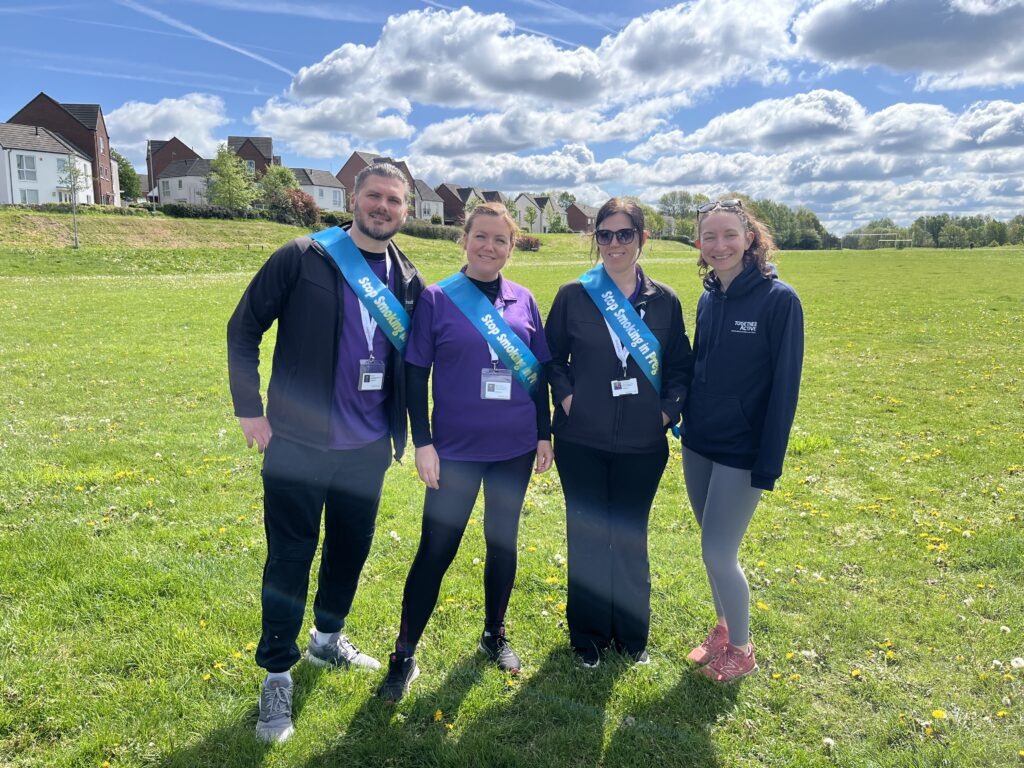
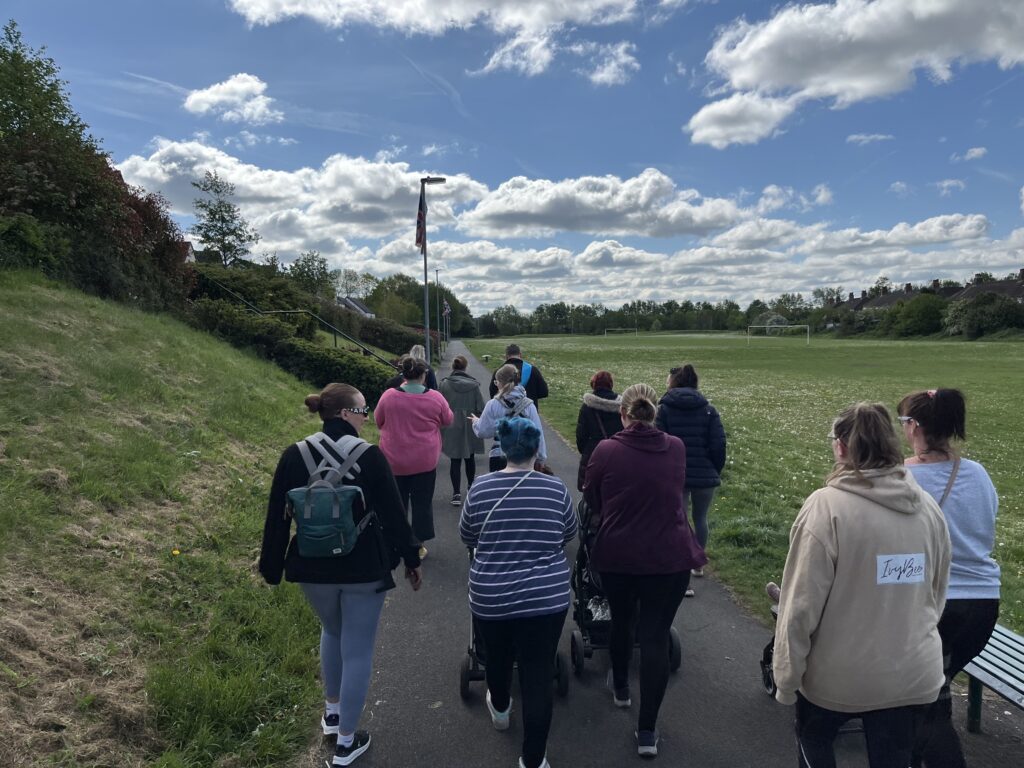
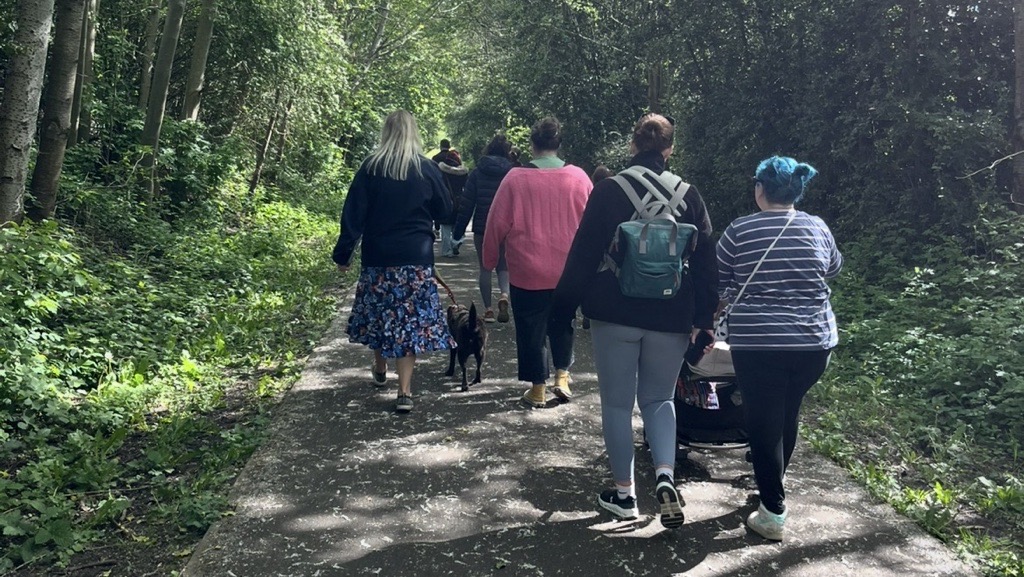
We were proud to lead two community walks across our key priority areas of Newcastle-under-Lyme and Burton-upon-Trent, bringing together mothers, professionals, and supporters of the campaign to walk for maternal mental health.
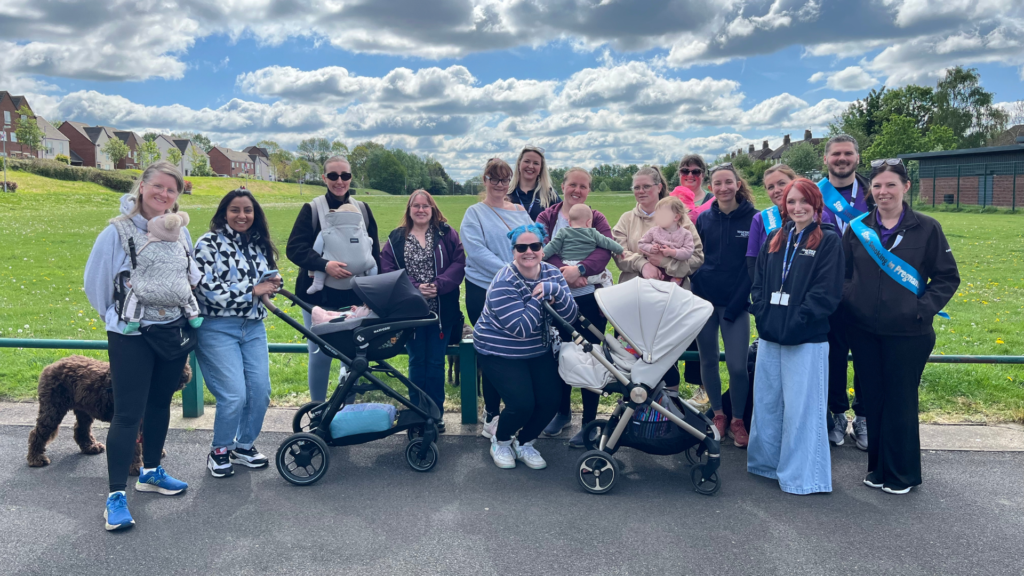
What We Heard
For us, these events were about more than awareness. It was an opportunity to connect directly with mothers and better understand how their experiences of motherhood and maternal mental health shape the way they access and feel about physical activity. With statistics across Staffordshire showing perinatal mental health conditions affect up to 27% of new and expectant mothers, we know that without timely support these experiences can have significant and long-lasting impacts on mothers, babies and families.
Identity and Motherhood
Throughout the walks, women kept returning to the same theme: that once a woman becomes a mother, there’s often an expectation that her own identity disappears.
We heard from mothers whose lives before pregnancy were built around being active. From long hikes and running clubs to CrossFit, strength training and team sports, physical activity wasn’t simply exercise, it was confidence, routine, community and identity.
Many women shared that after giving birth, they no longer felt seen as capable or strong in the same way they had before. Activities aimed at mothers often felt slow-paced, gentle and heavily centred around recovery, when what some women really wanted was challenge, intensity and the feeling of being strong again.
One mother spoke about experiencing significant birth trauma following an emergency caesarean under general anaesthetic, leaving her with no conscious memory of her baby’s birth. Alongside difficulties bonding with her baby and trying to access mental health support, she also found herself unable to return to the activities that had once grounded her. Her running group could not accommodate babies due to insurance restrictions, while her gym told her she had fallen too far behind to re-join her usual classes. The thing that might have helped her most was the thing she kept being turned away from.
What came through strongly was that women weren’t rejecting movement or exercise, they were rejecting support that no longer reflected who they were.
For women whose identities had been built around strength, endurance and high-intensity activity, the expectation that motherhood should soften them felt limiting and, at times, disempowering.
The kind of movement being offered wasn’t the only barrier raised. Parenting itself is unpredictable, and many mothers spoke about how difficult that makes structured activity offers. Session block bookings, rigid progression routes in gyms, and limited childcare options due to provider costs and insurance all made activities feel unrealistic or out of reach.
These systems often assume parents have routine, certainty and spare capacity week to week, when the reality for many mothers is the opposite.
Running through almost every conversation was exhaustion. Broken sleep, recovery from birth, isolation, financial pressures and limited support all shape whether physical activity feels possible on any given day. The challenge for most mothers wasn’t understanding the value of movement, it was trying to access it while navigating a completely different reality.
Why Connection Matters
Many women also shared experiences of traumatic births, strained relationships, loneliness and isolation. One of the more unexpected things we heard was that baby groups do not automatically create connection. While these spaces are often designed to reduce loneliness, several mothers described still feeling isolated even while surrounded by other parents.
This wasn’t necessarily because groups were unwelcoming, but because many spaces remained heavily focused on the baby rather than the parent. Exhaustion, anxiety and the demands of caring for a baby often reduced opportunities for genuine social connection, leaving some women feeling as though they had become an extension of their role as a mother, rather than a person in their own right.
At the same time, we also saw how powerful connection can be when women are given the opportunity and space to find it. We were pleased to be joined by one mother who had recently moved to the area and shared that since having her baby, our walk was the first time she had attended something outside the house to meet other mums. During the walk, she formed connections with other local mothers who were able to signpost her towards activities, groups and opportunities to socialise locally.
What we heard throughout these walks was that supporting maternal mental health cannot begin and end with awareness alone. Women need opportunities that recognise the complexity of motherhood, preserve identity rather than replace it, and make movement and connection accessible in ways that reflect the realities of parenting.
Marching together
We were lucky to be joined by several brilliant organisations whose work closely reflects the themes of support, connection and maternal wellbeing raised throughout the walks.
Thrive at Five supports families in the early years through community connection and parent support, helping create the networks many mothers told us are vital to their wellbeing.
Blaze Trails CIC is a parent-led walking community helping parents feel confident getting outdoors with their babies through free, supportive spaces that reduce isolation and build connection.
We were also joined by the team from Everyone Health Staffordshire’s Stop Smoking in Pregnancy service, who provide free, non-judgemental support for pregnant women and families to help create healthier, smoke-free homes.
Thank you to everyone who joined us at both walks!